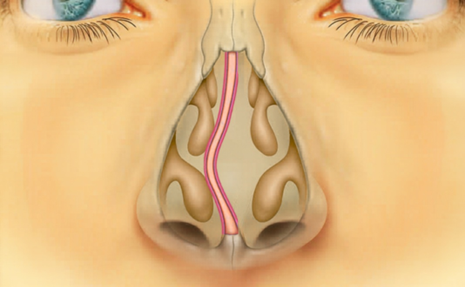
Deviated Septum

Deviated Septum Treatment

A deviated septum occurs when the thin wall (nasal septum) between the nasal passages is displaced to one side. This condition can partially block airflow through the nose, making breathing difficult. Many people have a mild deviation without symptoms, but in more severe cases it can lead to chronic nasal congestion, sinus infections, and breathing problems. Proper diagnosis and treatment can help restore normal airflow and improve overall nasal function.

  1. Common Causes of Deviated Septum:
    • Congenital Condition: Some people are born with a deviated septum.
    • Nasal Injury: Accidents or trauma to the nose can shift the nasal septum.
    • Growth Changes: During growth and development, the septum may shift or become uneven.
    • Age-related Changes: Structural changes in the nose may worsen deviation over time.
  1. Symptoms of Deviated Septum:
    • Difficulty breathing through one or both nostrils
    • Frequent nasal congestion
    • Recurring sinus infections
    • Nosebleeds
    • Snoring or disturbed sleep
    • Facial pain or pressure
  2. Diagnosis:
    • Physical examination of the nasal passages
    • Nasal endoscopy to examine internal nasal structures
    • Imaging tests such as CT scan if sinus complications are suspected
    • Evaluation of breathing difficulties and medical history
  3. Treatment Options:
    • Medications: Nasal sprays, decongestants, and antihistamines to relieve symptoms.
    • Allergy Management: Controlling allergies to reduce nasal inflammation.
    • Septoplasty: A surgical procedure to straighten the nasal septum and improve airflow.
    • Endoscopic Procedures: Used when sinus issues are associated with the deviated septum.
  4. Prevention and Care:
    • Protect the nose from injury during sports or physical activities
    • Manage allergies and sinus infections promptly
    • Maintain good nasal hygiene
    • Consult an ENT specialist if breathing problems persist